.webp)

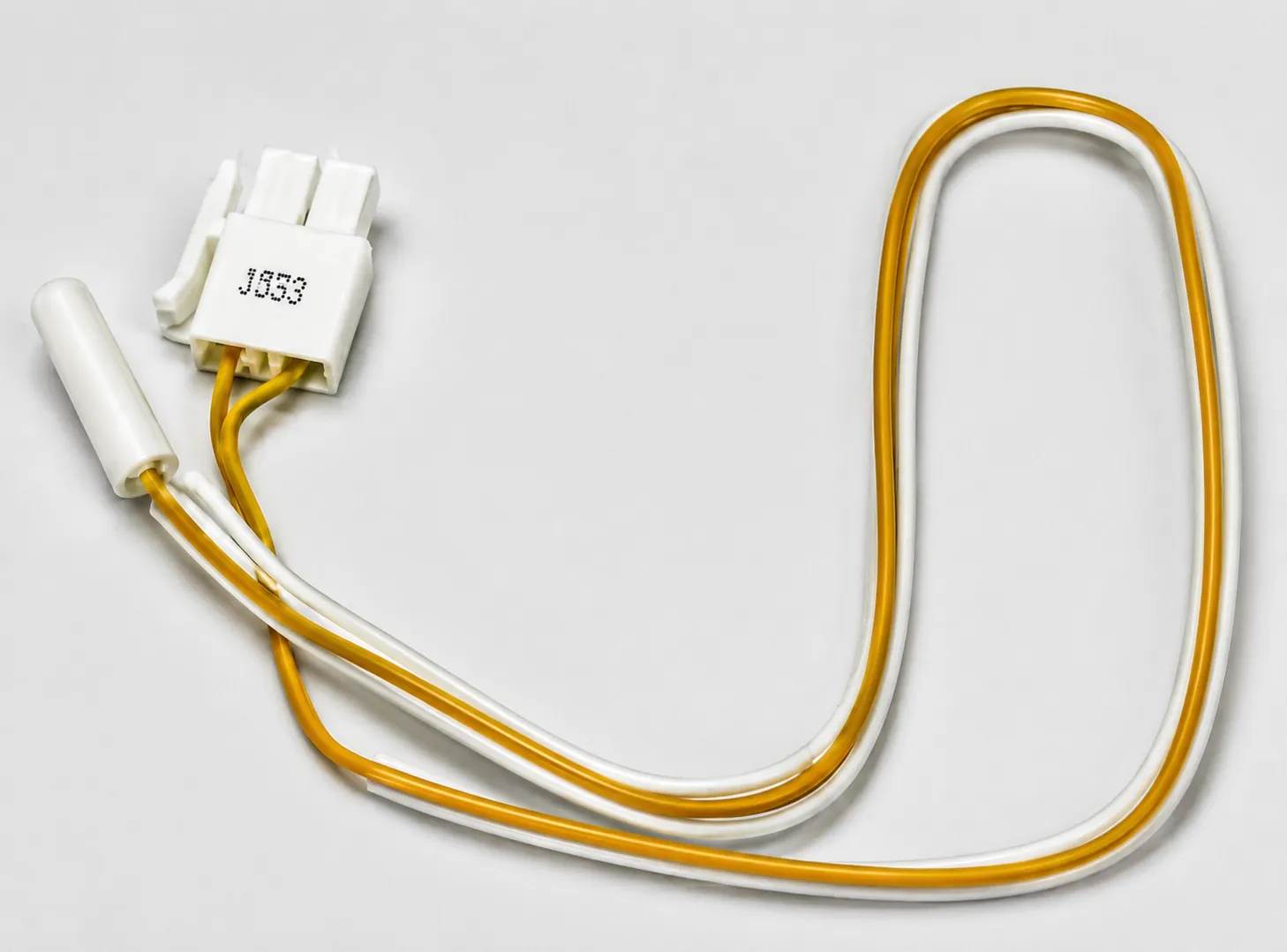
What Are Samsung Refrigerator Temperature Sensors?
Modern Samsung refrigerators use multiple temperature sensors, also called thermistors, to monitor:
- refrigerator compartment temperature
- freezer temperature
- evaporator temperature
- ice maker temperature
- ambient room temperature
These sensor readings are constantly sent to the main control board (PCB), which uses the information to control:
- compressor operation
- evaporator fan motors
- dampers
- defrost cycles
- ice maker systems
When one of these sensors becomes inaccurate, open, or shorted, the refrigerator may develop cooling issues, defrost problems, ice maker failures, or display diagnostic error codes.
How Samsung Thermistors Work
Samsung refrigerators use NTC (Negative Temperature Coefficient) thermistors.
This means:
- resistance decreases as temperature increases
- resistance increases as temperature decreases
Each thermistor circuit uses:
- 5V DC reference voltage from the main PCB
- dedicated DC ground circuit
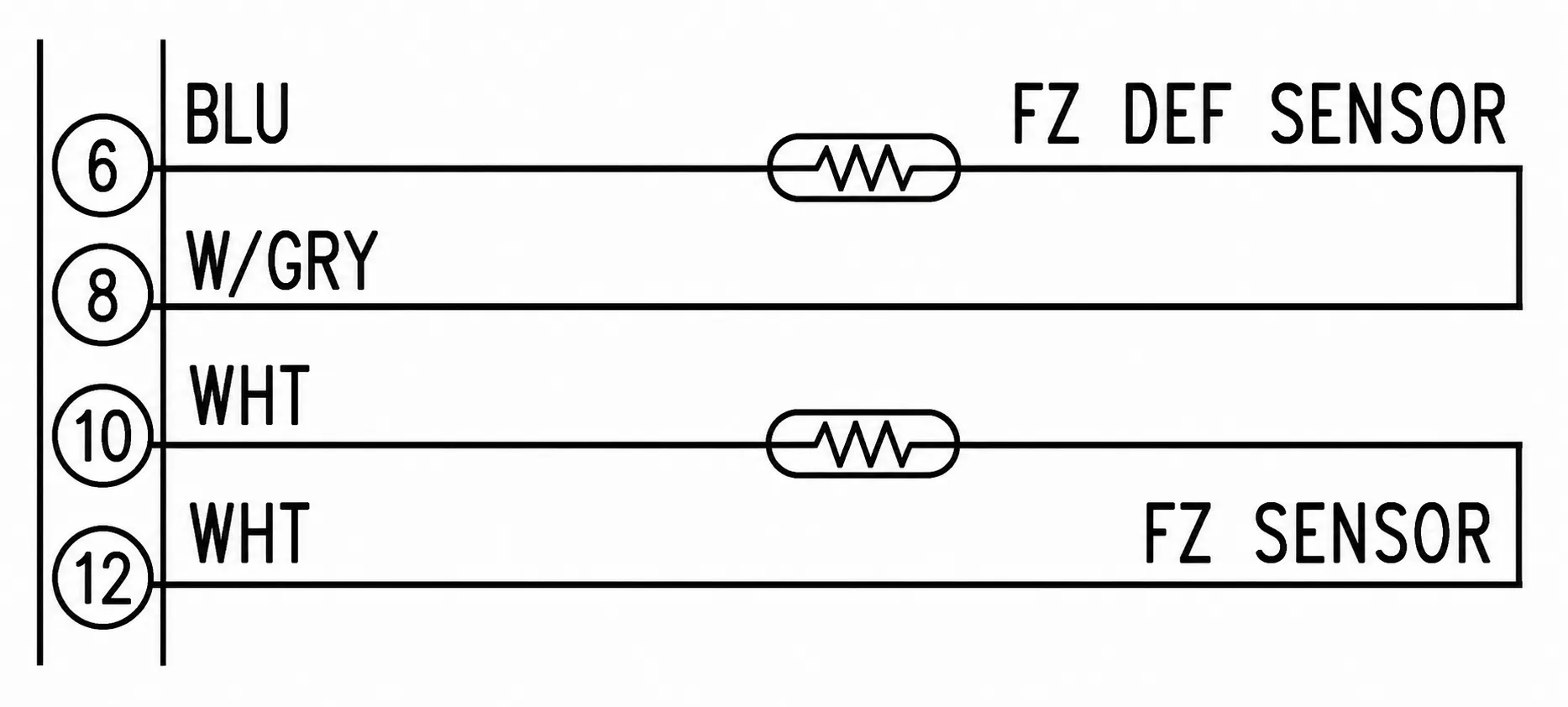
The control board monitors voltage changes in the sensor circuit and converts them into temperature readings used to control refrigerator operation.
Common Samsung Refrigerator Thermistor Error Codes
If the PCB detects an open or shorted sensor circuit, it may trigger an error code.
Common Samsung refrigerator thermistor error codes include:
- 1E / 1C — Freezer temperature sensor error
- 2E / 2C — Refrigerator temperature sensor error
- 4E / 4C — Freezer defrost sensor error
- 5E / 5C — Refrigerator defrost sensor error
- 6E / 6C — Ambient air temperature sensor error
- 8E / 8C — Ice maker sensor error
- 14E / 14C — Refrigerator ice maker sensor error
- 15E / 15C — Ice room sensor error
These error codes help narrow diagnostics to a specific refrigerator circuit or temperature sensor.
Why Temperature Sensors Cause Cooling Problems
A failed or inaccurate thermistor can create several refrigerator problems including:
- refrigerator not cooling properly
- freezer too warm
- excessive frost buildup
- evaporator fan not running
- refrigerator running constantly
- ice maker not working
- defrost failures
One important thing to understand is that a thermistor may still test “within range” while providing inaccurate temperature readings.
This may not trigger an error code but can still cause major cooling issues.
Diagnostic Procedure for Samsung Temperature Sensors
Step 1 — Run Self Diagnostics
Always begin by checking for stored refrigerator error codes.
If no sensor-related codes are present but the refrigerator still has cooling issues, continue testing manually.
If an error code is stored:
- focus only on the affected sensor circuit
- avoid replacing unrelated components
Step 2 — Perform a Visual Inspection
Before electrical testing:
- inspect connectors
- look for disconnected harnesses
- check for broken wires
- inspect for moisture or corrosion
Many Samsung refrigerator sensor problems are caused by damaged wiring rather than failed control boards.
Step 3 — Verify Sensor Voltage and Ground
With the refrigerator powered on:
- back-probe the thermistor circuit at the main PCB
- verify 5V DC reference voltage
- verify DC ground circuit
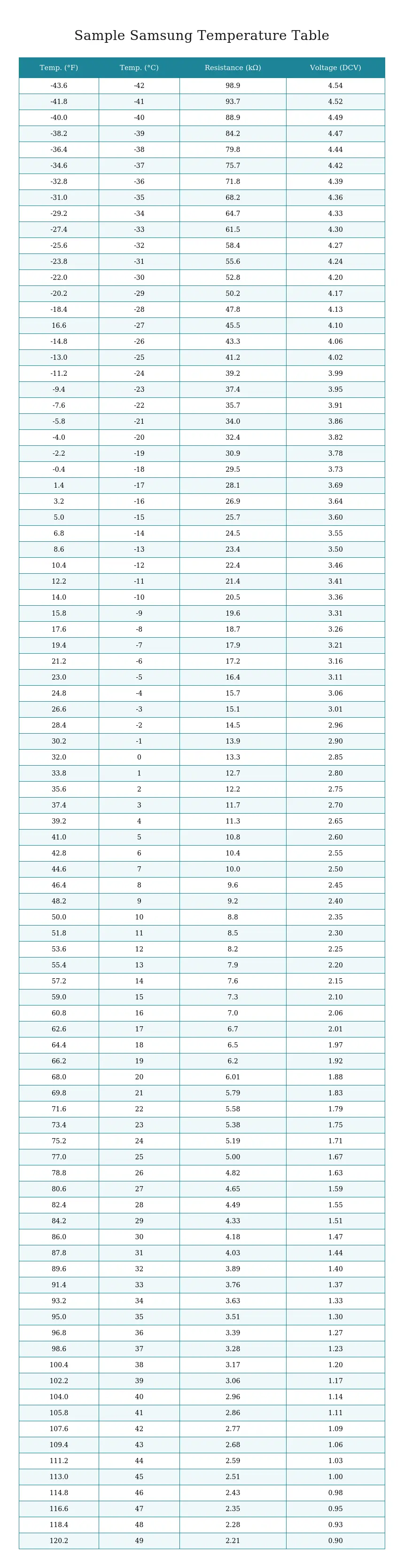
Normal voltage range:
- approximately 4.5V–1.0V DC
Diagnostic results:
- above 4.5V DC may indicate an open circuit
- below 1.0V DC may indicate a shorted circuit
If no voltage is present and the circuit tests good, the main PCB may be defective.
Step 4 — Test Thermistor Accuracy
A thermistor can still fail without setting an error code.
Using the refrigerator service manual:
- compare resistance values to the temperature chart
- compare sensor readings to actual temperature
If the readings are inaccurate:
- inspect wiring resistance
- test the thermistor directly
- replace the faulty sensor if necessary
Bench Testing Samsung Thermistors
Samsung thermistors can be tested:
- inside the refrigerator
- removed from the refrigerator
Bench Testing Tip
One of the best methods is testing the thermistor inside ice water.
Ice water should measure close to:
- 32°F
If the thermistor resistance does not match the expected value from the temperature chart, the sensor is defective.
Important Samsung Refrigerator Diagnostic Tip
Do not automatically assume the main control board is bad.
In many Samsung refrigerator service calls involving thermistor errors, the actual cause is:
- failed thermistors
- damaged wiring harnesses
- corroded connectors
- moisture intrusion
PCB failures happen less often than sensor and wiring failures.
Professional Samsung Refrigerator Diagnostics
Modern Samsung refrigerators use advanced electronic controls and multiple sensor circuits to manage cooling performance.
Professional refrigerator diagnostics can help identify:
- faulty thermistors
- defrost sensor failures
- inaccurate temperature readings
- wiring harness damage
- PCB communication problems
- intermittent cooling issues
Proper thermistor testing helps prevent unnecessary part replacement and allows refrigerator problems to be diagnosed much faster.
Featured Articles
.svg)