What Sets a Good Appliance Repair Apart
Most oven and range problems have a short list of likely causes. A trained technician with the right testing equipment can identify the actual cause in most cases on the first visit. What separates a quality repair from a frustrating one isn't the parts — it's the diagnostic process that determines which parts actually need replacing.
We test before we replace. Every repair we complete in Matthews starts with a systematic inspection of the appliance — not a visual check, but actual electrical and mechanical testing of the components involved. The repair recommendation follows from what the testing shows, not from what seems most likely at a glance.
Cooking Appliances We Service in Matthews
Ranges
Freestanding Gas and Electric Ranges
The standard configuration in most Matthews kitchens. We service both fuel types across all major brands — burner systems, oven heating components, control panels, and everything in between.
Slide-In Ranges
Built to integrate seamlessly with countertops. Slide-in ranges from standard and premium manufacturers serviced on-site — same diagnostic process, same quality repair standard.
Dual Fuel Ranges
Gas cooktop performance combined with electric oven precision. These appliances have two separate systems that need to be diagnosed and serviced independently. We work on both.
Ovens
Single and Double Wall Ovens
Wall ovens installed in cabinetry present specific access and component challenges that freestanding units don't. We service both single and double configurations — individual cavities and shared control systems.
Built-In and Combination Units
Combination microwave-oven units, speed ovens, and built-in oven configurations from brands like Wolf, Thermador, and Miele require specific knowledge of proprietary systems. We have that knowledge.
Professional and Luxury Appliances
Viking, Wolf, Thermador, Bertazzoni, La Cornue, and similar brands are engineered differently from standard residential appliances. Higher BTU outputs, more complex ignition systems, proprietary control boards, and European component standards all require a technician who actually understands the platform — not just general appliance repair principles applied to unfamiliar hardware.
Diagnosing the Most Common Problems
The Oven Heats — Just Not Enough
An oven that reaches temperature but can't hold it, or that heats slowly and unevenly, is usually dealing with a heating element that's partially failed — still functioning but no longer producing full output. It can also point to a temperature sensor that's reading higher than the actual cavity temperature, causing the control board to cut heat sooner than it should.
The Oven Produces No Heat at All
Complete heating failure with normal power-on behavior narrows the cause considerably. On electric ovens, a failed bake element is the most common culprit — confirmed by a visual inspection for damage and an electrical continuity test. On gas ovens, a weak igniter that can no longer reach the temperature required to open the gas valve is the most frequent cause.
Burners That Won't Light Reliably
A burner that lights on the third or fourth try — or that requires holding the igniter longer than it used to — is in the early stages of an ignition problem. Clogged burner ports, a weakening spark module, moisture around the igniter, or a worn ignition switch are the typical causes. Waiting until it stops lighting entirely makes the diagnosis the same but the inconvenience significantly worse.
Oven Running at the Wrong Temperature
If you've started adjusting recipes to compensate for your oven's temperature — adding time, reducing heat, or covering dishes earlier — the oven's calibration has drifted. A professional temperature test confirms how far off it is and whether the issue is the sensor, the thermostat, or the control board's interpretation of sensor data.
Control Panel Issues
An unresponsive touchpad, buttons that register inconsistently, or a display that shows incorrect information are all symptoms of electronic control faults. These can involve the control board itself, the membrane switch overlay on touchpad models, or the wiring harness connecting the two.
The Most Common Causes — and Why They Happen
Heating element failure is the most common electric oven repair. Elements are constantly expanding and contracting with heat cycles — thousands of times over the life of the appliance. The failure point varies by usage intensity, but no element lasts indefinitely.
Igniter degradation is the most common gas oven repair. Gas igniters function by getting hot enough to open the gas valve — typically around 3.2 to 3.6 amps. As they age, they draw less current, take longer to glow, and eventually can't reach the threshold that opens the valve.
Sensor drift happens gradually and is often the last thing homeowners suspect. A sensor that reads 25 degrees high causes the control board to cut heat early — the oven never actually reaches the set temperature even though the display says it has.
Control board failure is less predictable than mechanical component wear. Boards can fail from power surges, heat exposure over time, or component-level failure. Symptoms range from intermittent to complete and often present as other problems before the board failure is identified.
Grease and debris accumulation in ignition components is almost entirely preventable — but it's among the most common causes of burner ignition problems we diagnose. Regular cleaning of burner ports and igniter areas prevents the buildup that eventually disrupts spark generation.
Brands We Repair in Matthews
Standard Residential: Whirlpool, GE, Samsung, LG, Frigidaire, KitchenAid, Maytag, Amana
Premium and Professional: Viking, Thermador, Wolf, Bertazzoni, Bosch, Miele, La Cornue, Dacor, Monogram
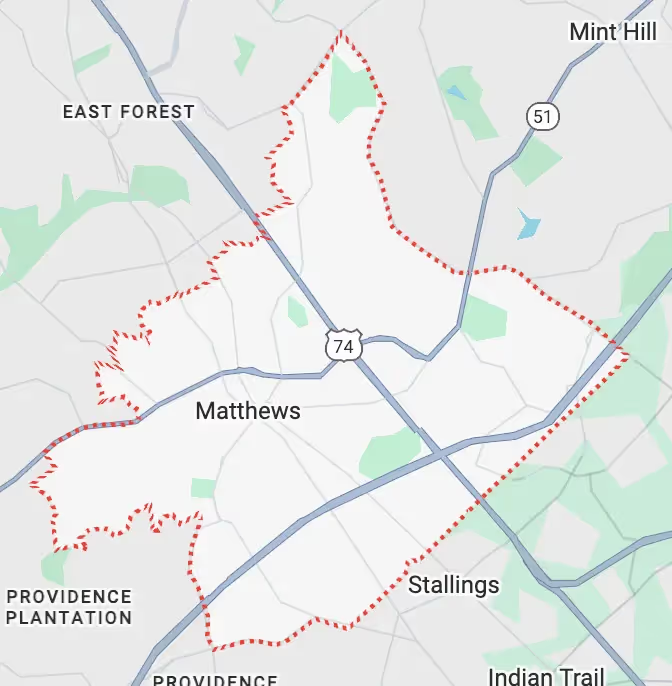
Schedule Service in Matthews
If your oven or range is showing signs of a problem — or has already stopped working — the right next step is a proper diagnostic, not a parts guess. Our technicians serve Matthews and surrounding communities with prompt scheduling and same-day availability on most calls.
.webp)