.webp)

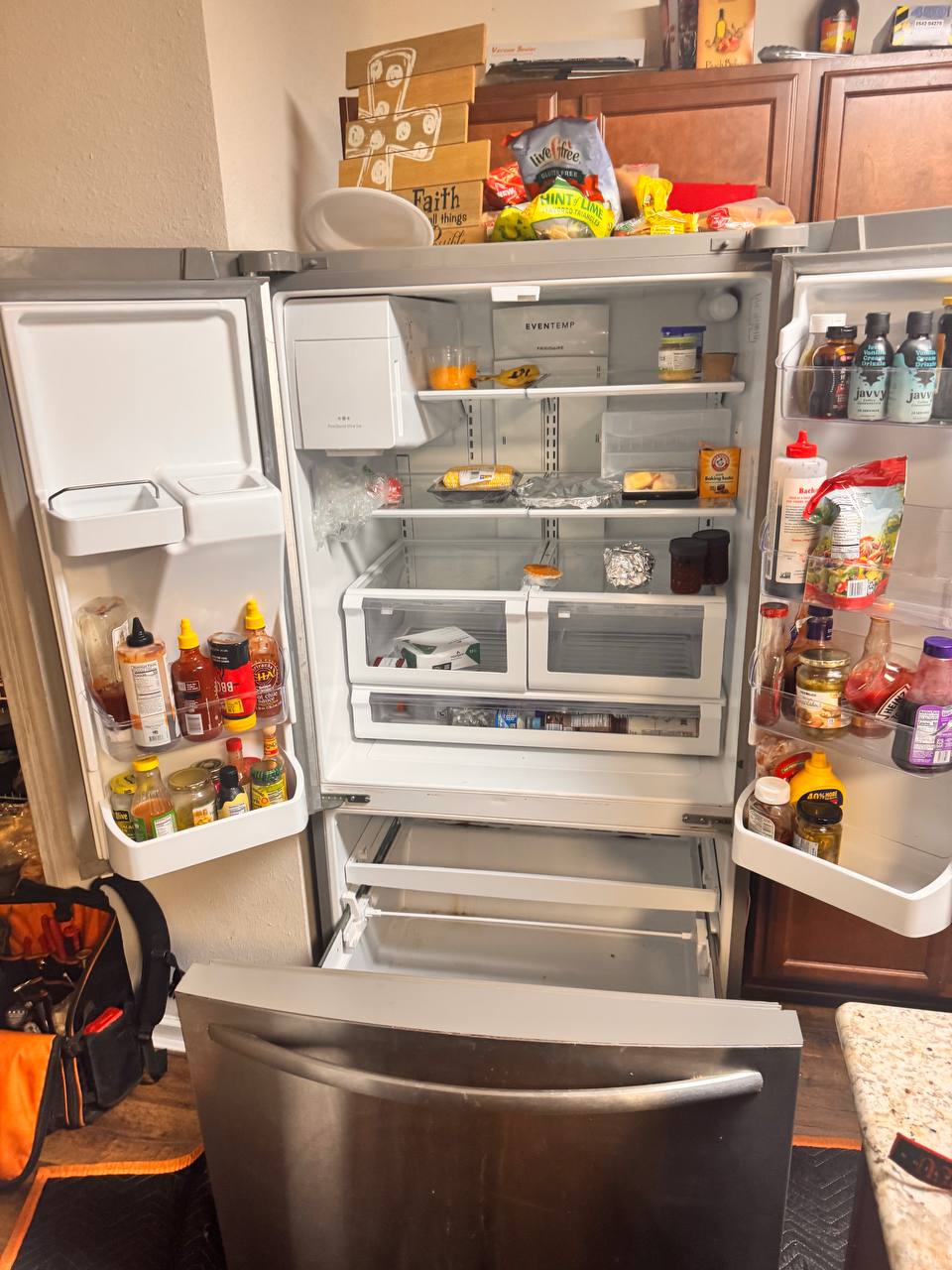
Is It Normal for a Fridge to Freeze Food?
No. The fresh food section of your refrigerator should be kept between 37 and 40 degrees Fahrenheit. Anything colder than that, particularly items near the back wall or air vents, will begin to freeze. If your refrigerator is consistently turning food to ice, something is causing it to run colder than normal.
What Causes a Refrigerator to Freeze Food in the Fridge Section?
Temperature Setting Is Too Low
This is the most common and simplest cause to address. If your fridge is set to 37 degrees or lower, items near the back or close to the vents are at serious risk of freezing. Try increasing the setting to 38 or 39 degrees and giving it 24 hours to stabilize. A simple fridge thermometer can help you determine what temperature you're actually at.
Blocked Airflow Inside the Fridge
Cold air exits the evaporator via vents inside the refrigerator. If food is packed right up against an air outlet vent, it will be blasted with cold air and may freeze even if the overall temperature appears to be normal. Another variation of this issue is a blockage in return airflow. Cold spots form when air does not properly circulate back to the evaporator. And if something blocks the temperature sensor, the fridge may never receive the signal to stop cooling.
Damaged Door Gasket
The rubber seal around your refrigerator door keeps cold air in and warm air out. When that seal is cracked, warped, or pulling away from the door, warm outside air seeps in. The fridge responds by running the compressor longer to compensate, and that extra cooling can push parts of the fridge below freezing. Run your hand along the door seal when the fridge is closed and feel for air escaping. You can also close a piece of paper in the door and see if it slides out easily. If it does, the seal is not doing its job.
Ice Maker Issues
If your refrigerator has a built-in ice maker in the fridge section, that compartment needs to seal properly. When the ice bucket is not fully seated or the compartment seal is damaged, freezer-temperature air can leak directly into the fridge section. Also worth knowing: if the ice maker is turned on but not connected to a water supply, it keeps cycling and trying to produce ice, which releases excess cold air inside the fridge. If you are not using the ice maker, turn it off.
Faulty Thermostat or Temperature Sensor
The thermostat controls when the compressor runs and when the damper opens and closes. If it is malfunctioning, the compressor may run too long, or the damper may stay open longer than it should, letting too much cold air flood the fresh food section. A faulty temperature sensor can cause the same problem by sending inaccurate readings to the control board.
Damper Control Stuck Open
The damper is a small flap that controls how much cold air flows from the freezer into the fridge section. When it is working correctly, it opens and closes based on temperature. When it gets stuck open or does not seal properly when closed, too much cold air pours into the fridge continuously. This is a common cause of freezing that is easy to overlook.
Dirty Condenser Coils
When the condenser coils are clogged with dust and pet hair, the refrigerator cannot release heat efficiently. To compensate, the compressor runs longer and works harder. That extra run time can push the fridge section colder than intended, especially in areas close to airflow sources. Cleaning the coils every 6 to 12 months is one of the best things you can do to keep your refrigerator running right.
Control Board Problems
If the control board is sending incorrect signals to the compressor or damper, the entire cooling system can behave erratically. This is one of the harder causes to diagnose without proper service equipment, but it is worth ruling out other causes first before replacing a control board.
Weak Sealed System
A refrigerator with a refrigerant leak or a failing compressor may run almost continuously trying to maintain freezer temperatures. All that extra running can overcool the fresh food section as a side effect. If your freezer temperature is higher than normal while the fridge section is freezing, that pattern can point to a sealed system issue.
How Do You Fix a Refrigerator That Is Freezing Food?
Start with the simple stuff and work toward the more technical causes:
Adjust the Temperature Setting
Set your fridge to 38 degrees Fahrenheit or slightly above. Place a thermometer in the middle of the fridge and check it after 24 hours. This alone solves the problem for many homeowners.
Reorganize What Is in the Fridge
Move items away from the back wall and away from any visible air vents, usually located at the top back or sides of the fridge interior. Leafy greens, drinks, and anything liquid are most vulnerable to freezing near vents.
Avoid Overpacking
A fridge that is crammed full blocks air circulation and creates cold spots. Leave enough space for air to move around freely.
Clean the Condenser Coils
Unplug the fridge first. The coils are usually underneath behind the kick plate or at the back. Vacuum or brush away the buildup. It takes about 10 minutes and makes a real difference in how efficiently the fridge runs.
Check the Door Gasket
Look for visible cracks, tears, or areas where the seal is not flush against the fridge. If the gasket is damaged, it can usually be replaced without replacing the whole door.
Check the Ice Maker
Make sure the ice bucket is fully seated and the compartment is sealed. If you are not using the ice maker, turn it off and see if the freezing problem goes away.
Test the Thermostat and Damper
These tests will require you to enter service mode on your particular refrigerator model. You can also go into service mode and compare the actual temperature sensor reading to what the fridge display shows. You can also manually test the sensor. You can open and close the damper and check for smooth operation and proper sealing. If you are not comfortable doing this yourself, this is a good place to call a technician.
When Should You Call an Appliance Repair Technician?
If adjusting the temperature, cleaning the coils, and checking the gasket and ice maker do not solve the problem, the cause is likely a faulty thermostat, temperature sensor, damper, control board, or a sealed system issue. These require proper diagnostic tools and hands-on testing to confirm.
Our team serves Charlotte and the surrounding areas, and we provide refrigerator diagnostics for all major brands. If you can't figure out why your fridge is freezing food, contact us right away!
Featured Articles
.svg)